
Triggers
A trigger is the starting block of every flow and is used to indicate the event that will kick off the flow.
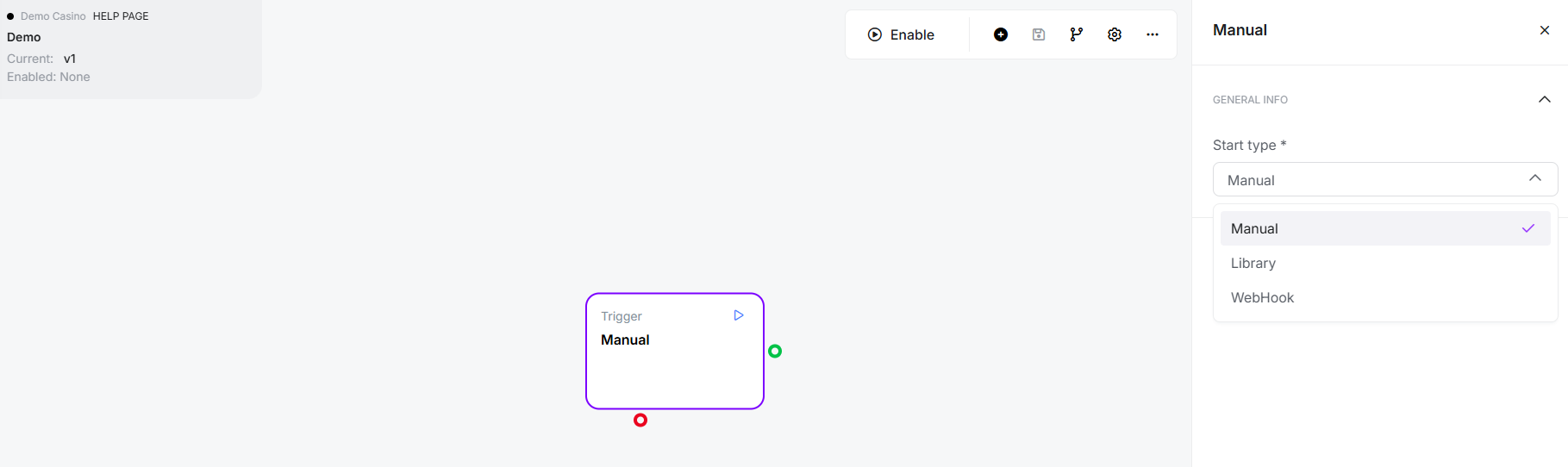
Triggers can be one of three types:
| Trigger Type | What calls it? | Description |
|---|---|---|
| Manual | An external system or application, via an API call | Flow is triggered only through a Single Flow Webhook API call — a synchronous call made directly to one specific flow's unique ID |
| Library | Another flow, inside the Flows platform | Flow is triggered by calls from other flows. This is helpful for frequently called flows that you wish to call from other flows |
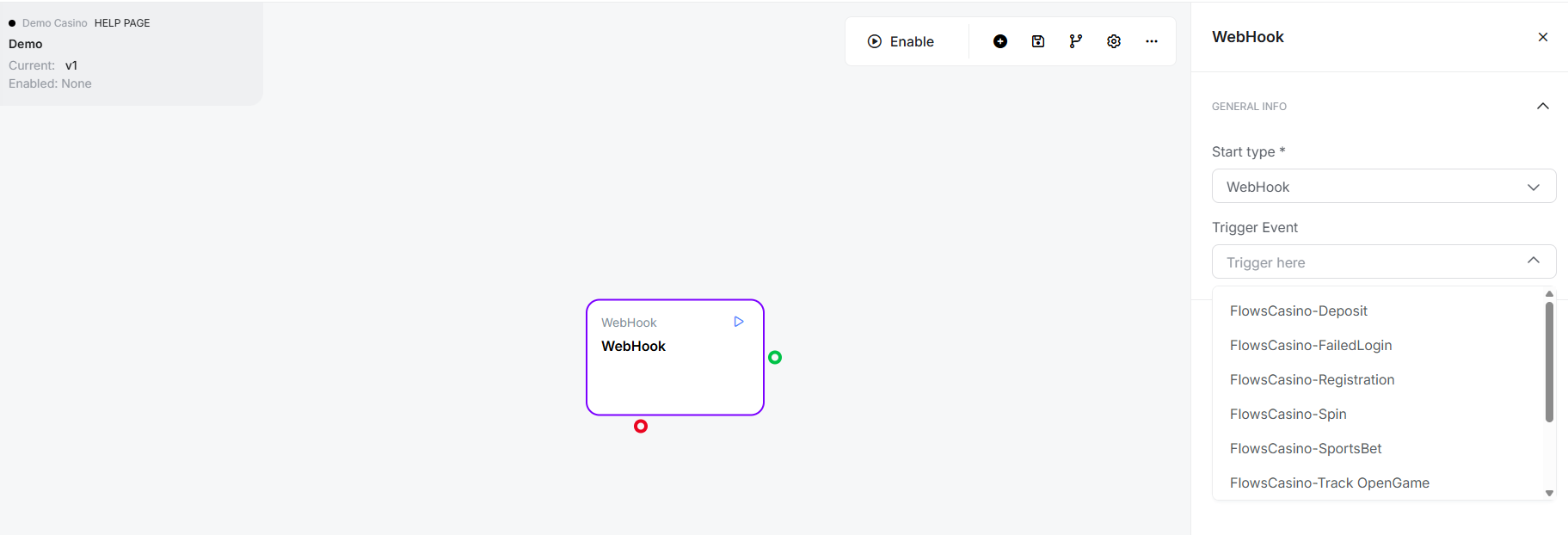
| Event | Either a real-time event from your own system, or a MultiFlow webhook call | Flow is triggered through a data event — this event can arrive either as a real-time stream from your own systems (e.g. Kafka, RabbitMQ, SQS), or as a MultiFlow webhook API call. Both are valid ways to fire a flow configured with the WebHook trigger type |
Note: the Start type shown in the builder is labeled "WebHook", but this does not mean the only way in is an HTTP webhook call. An event pushed from your own system through a real-time data stream, and an explicit MultiFlow webhook call, both land on the same WebHook trigger type — the difference is simply how the event physically arrives.
Important: After selecting WebHook/Event as the Start type, a second field appears — Trigger Event — where you choose the specific event from a list. WebHook is the top-level trigger type; Trigger Event is the specific event within it.
Single Flow Webhook vs. MultiFlow Webhook
There are two ways an external call can reach a flow:
- Single Flow Webhook — a synchronous API call aimed at one specific flow's unique ID. This is a direct, one-to-one call, and is what powers the Manual trigger type. It's the right choice when you need an immediate response back in the same call — for example, an "ask and wait for the answer" pattern like fetching a leaderboard or checking a bonus status.
- MultiFlow Webhook — one API call that broadcasts an event out to every flow currently listening for it. This is one-to-many, and is what powers the WebHook trigger type together with real-time data streams.
Automatic Event Learning
The first time an event or webhook call arrives, Flows automatically learns its structure — field names and types included. There is no need to manually map fields before you can start building logic around them.
Security
Every call is authenticated with an API key sent in the x-api-key header, unless a flow is explicitly marked public — in which case the API key is not required, but the flow must avoid handling sensitive data.
Creating and Configuring a Trigger
When creating a new flow you will always see the Start block created for you as the first stage.
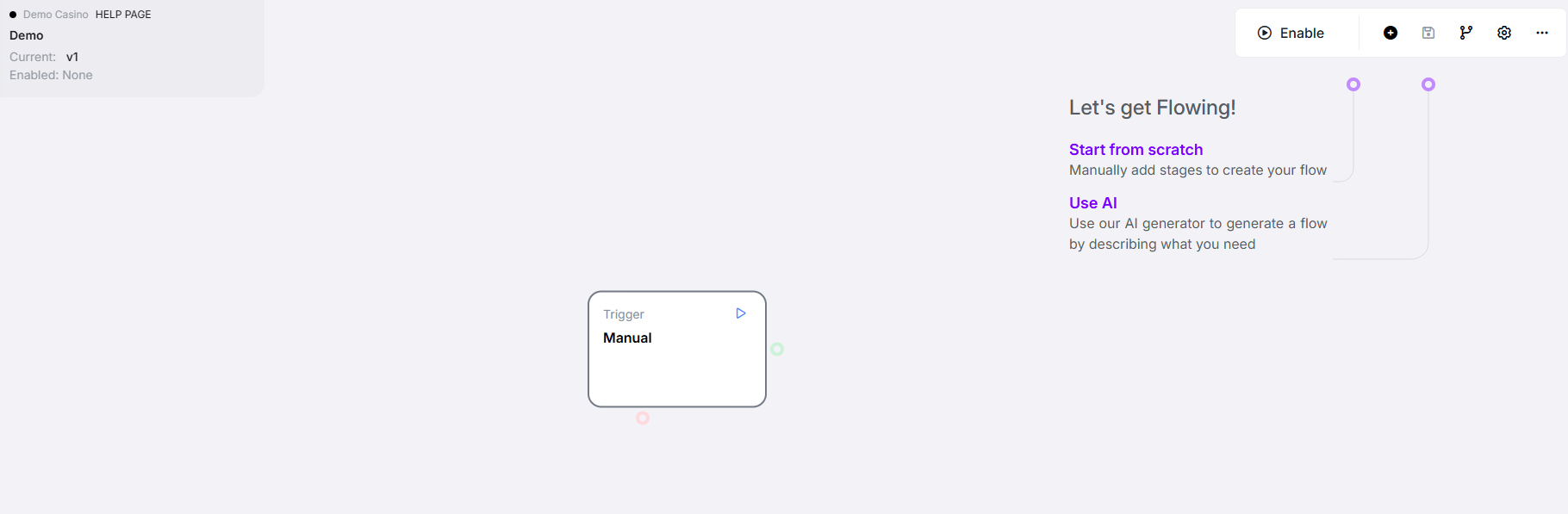
Clicking on the start block will open the properties panel where you can configure the trigger that is to be used. Open the Start type dropdown to choose between Manual, Library, and WebHook.
Once you've configured a trigger you can continue building your flow by adding new stages.
Related
- Trigger a Single Flow (FlowsJS) — call a Manual-triggered flow by its ID and use the response directly
- Send Event to Flows (FlowsJS) — send one event that starts every WebHook-triggered flow listening for it
- Listen to Events from Flows (FlowsJS) — receive real-time pushes from a flow using Push Event To User